


Summer Flower Arrangements Using Garden Blooms
Combine bright summer flowers from your garden with foliage and herbs to create relaxed, fragrant arrangements for your home.

Why Garden Blooms Make the Loveliest Summer Arrangements
There is something quietly wonderful about a jug of flowers that was growing outside your kitchen window an hour ago. Garden flowers have travelled a few metres rather than a few hundred miles, so they reach the vase with their scent, colour and texture intact. Shop-bought stems are bred for shelf life and long journeys; the ones in your beds have been bred for beauty — blowsy dahlias, nodding cosmos, sweet peas whose fragrance fills a whole room.
They also suit the way most of us actually live. A garden arrangement is rarely a tightly packed, formal thing. It is loose, a little wild and deliberately imperfect, which means you can build one in ten minutes with a mug of tea in the other hand.
Picking and Conditioning: The Part That Really Matters
Cut in the cool of the morning or early evening, when plants are full of water and the sun is not steaming moisture out of them. Take a clean bucket of tepid water with you and plunge each stem in as you cut it.
- Cut on an angle with sharp secateurs, roughly 2.5cm above a leaf joint, so the stem can drink freely.
- Strip the lower leaves before they sit in water — submerged foliage rots quickly and turns the water sour.
- Condition for at least four hours in a cool, shaded spot, standing in deep water. Overnight is better still.
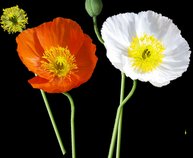
- Treat milky-stemmed plants separately. Poppies, euphorbia and some dahlias bleed a sap that seals the cut. Dip the stem end in just-boiled water for ten seconds, then straight into cold water.
- Give hydrangeas a helping hand by dipping the stem ends into alum powder, or standing them in warm water to begin with.
Sweet peas, roses and most annuals appreciate a teaspoon of sugar and a few drops of thin bleach per litre of vase water — the sugar feeds, the bleach keeps bacteria at bay.
Foliage and Herbs: The Backbone of a Relaxed Arrangement
Flowers alone can look a bit like a bunch from a garage forecourt. What makes a garden arrangement feel generous is the greenery, and this is where herbs earn their place. Rosemary and sage give you grey-green structure plus a scent that drifts across a room. Mint and lemon balm add soft, bright leaves. Fennel and dill, left to flower, supply airy umbels that knit everything together.
For froth and movement, alchemilla mollis is hard to beat — those lime-green sprays catch the light and soften hard edges beautifully. Catmint works alongside roses like an old friend. Thyme and lavender will trail over the rim of a jug, and scented geranium leaves bring a warm, rose-and-citrus note without a single bloom.
Pick foliage at the same time as your flowers and condition it in the same way. As a rule, aim for roughly one third foliage and herbs to two thirds flowers; that proportion nearly always looks right.
Putting It Together Without Fuss
Choose a vessel with a wide-ish neck — a stoneware jug, a Kilner jar, a teapot, an old enamel bucket. Narrow vases make stems bunch and bruise. If the opening is very wide, wedge a scrunched ball of chicken wire inside, or criss-cross tape across the top, to hold stems where you place them.
Start with the foliage, building a loose nest that covers the mechanics. Then add your tallest flowers towards the centre, working outwards and downwards so the arrangement has three heights: tall, mid and low. Turn the jug as you go rather than admiring it from the front only — it will be seen from the sofa and the doorway too. Group two or three stems of the same flower together instead of dotting them about; repetition looks intentional, scattering looks accidental. Leave a few gaps. Air and shadow are part of the charm.
Keeping the Display Fresh for Longer
Change the water every day or two and recut the stem ends by a centimetre each time. Lift out any fading blooms promptly, because they release ethylene gas that hurries the rest along.
- Keep arrangements out of direct sun and away from radiators, draughts and the fruit bowl.
- Move them somewhere cool overnight — a porch or utility room will add days to their life.
- Mist hydrangeas and anything with thin petals in the morning to slow moisture loss.
- Top up water daily in warm weather; thirsty blooms can empty a jug in a day.
If a stem flops but the flower is still perfect, cut it short and float it in a shallow bowl of water with a couple of leaves. Nothing need be wasted.
A Few Combinations Worth Trying
Once you have the method, the planting combinations suggest themselves. These are reliable starting points for a British summer garden:
- White and green: cosmos 'Purity', white scabious, alchemilla mollis and mint for a cool, calm hallway display.
- Hot and bold: scarlet and orange dahlias with calendula, bronze fennel and a few rosemary sprigs — superb on a kitchen table.
- Cottage romance: sweet peas, garden roses, nigella and catmint in a tall jug, as fragrant as it is pretty.
- Kitchen jug: sage, thyme, marjoram and rosemary with a handful of nasturtium flowers — practical, edible and endlessly forgiving.
Cut generously, condition properly and arrange loosely, and your garden will keep your home in flowers from June until the first frosts.

Post a comment